Find the human story
Start with the place the object occupies in daily life, then connect that idea to a simple visual brief.
Fictional design brief · phase 01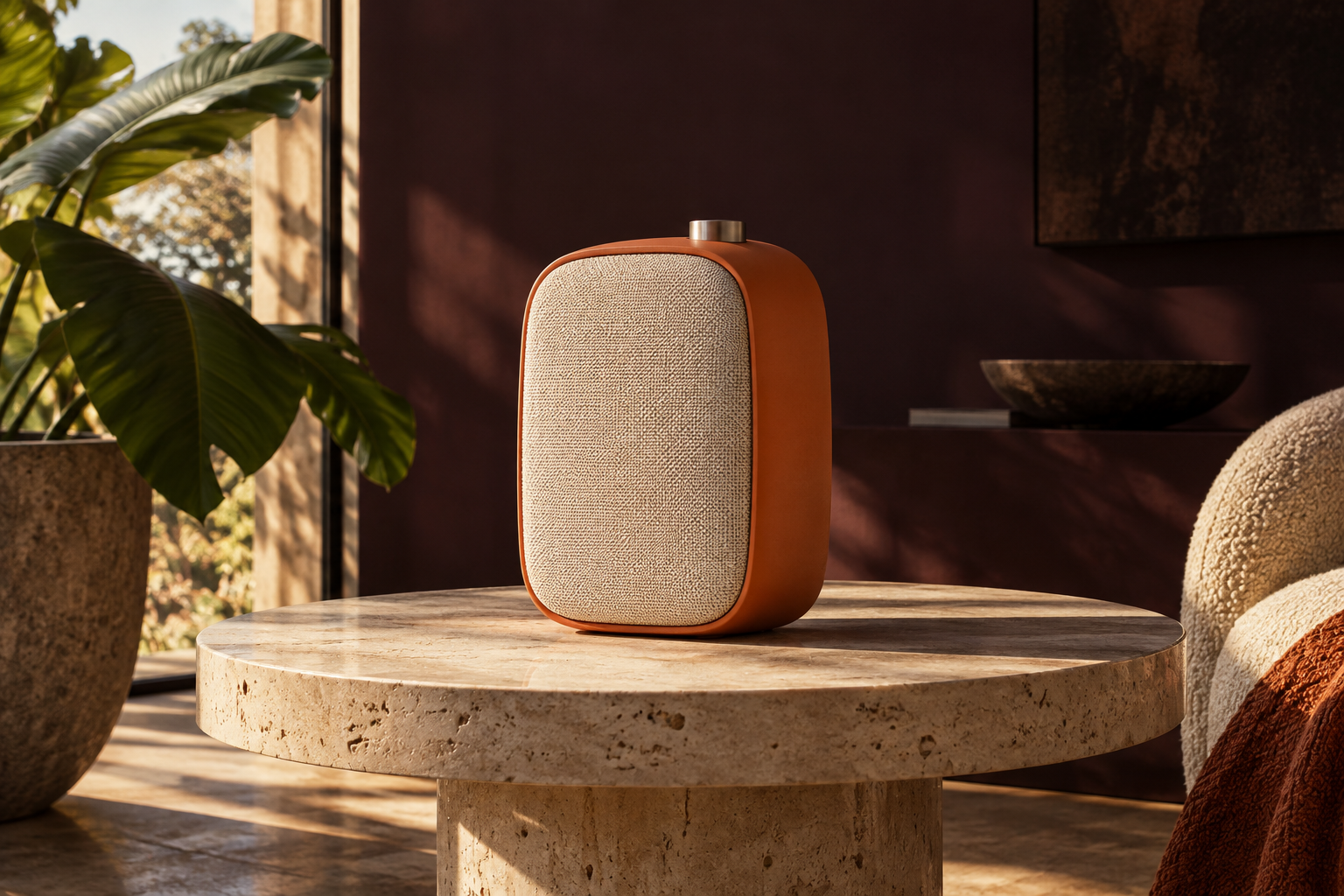
Audio brands often compete on specifications before anyone has imagined the product in their home. This fictional brief asked a different question: how could the first encounter feel like an invitation to listen?
We built the story around the room, not the spec sheet. A warm palette, generous type and a slower editorial rhythm make space for the object. Product details remain visible, but they no longer need to shout.
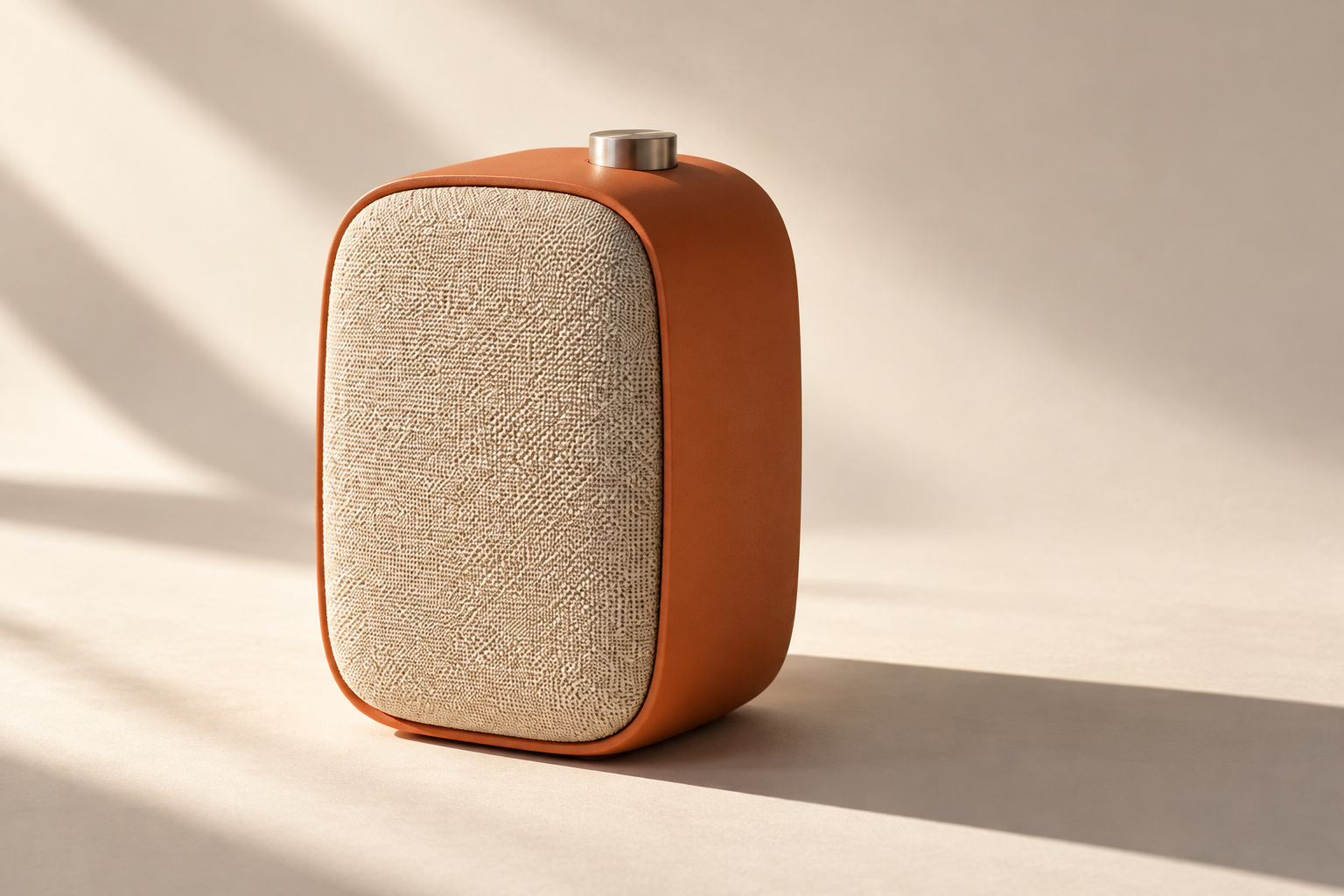
Terracotta, woven ivory and brushed metal form a deliberately small material vocabulary. The digital experience echoes that restraint: one strong image, a clear hierarchy and enough room to breathe.
Both product images were generated with Codex native image-gen for this fictional concept; they are not photographs of a manufactured product.
Start with the place the object occupies in daily life, then connect that idea to a simple visual brief.
Fictional design brief · phase 01Make the color, typography and material choices work together before multiplying applications.
Original concept direction · phase 02Use full-bleed imagery and editorial pacing, with accessible reading order and restrained motion.
Local website prototype · phase 03Deliverables and evidence. Not invented business impact.
A concept deliverable, not a measured brand-awareness result.
Fictional project deliverables ledgerTwo AI-generated product scenes. No real-product fidelity claim.
Native image-gen creation recordStrategy, identity, digital and art direction. No sales uplift is claimed.
Fictional scope and deliverablesA case study should make the work understandable, not dress assumptions up as outcomes. Show the decisions, the evidence and what you would do next.